Showing posts with label digital technology. Show all posts

Friday, June 1, 2012

Black Magic in Cinema Camera Segment

Blackmagic Designs, a company perhaps best known among film-makers for its external recording boxes, has announced its first camera - the Blackmagic Cinema Camera. It captures 2.5K (2432 x 1366) 12bit RAW footage with a claimed 13 stops of dynamic range on a sensor that is, at 16.64 x 14.04mm, slightly smaller than the Four Thirds standard. It features a Canon EF mount and the compact body includes a capacitive touchscreen and a Thunderbolt connection. EOSHD.com has published first impressions of the camera and what it offers the market.

Blackmagic Cinema Camera Key Features

  • High resolution 2.5K sensor allows improved anti aliasing and reframing shots.
  • Super wide 13 stops of dynamic range allows capture of increased details for feature film look.
  • Built in SSD allows high bandwidth recording of RAW video and long duration compressed video.
  • Open file formats compatible with popular NLE software such as CinemaDNG 12 bit RAW, Apple ProRes and Avid DNxHD. No custom file formats.
  • Includes no custom connections. Standard jack mic/line audio in, BNC 3 Gb/s SDI out, headphone, high-speed Thunderbolt I/O technology, LANC remote control and standard DC 12-30V power connection.
  • Capacitive touch screen LCD for camera settings and slate metadata entry.
  • Compatible with extremely high quality Canon EF and Zeiss ZF lenses.
  • Supports 2.5K and 1080HD resolution capture in 24, 25, 29.97 and 30 fps.
  • Thunderbolt connection allows direct camera capture via included Media Express software and supports live waveform monitoring via the included Blackmagic UltraScope software.
  • Includes a full copy of DaVinci Resolve 9.0 color grading software.
 

Tuesday, May 8, 2012

Super Zoom from FUJIFILM


Fujifilm introduces a super zoom camera, Fujifilm X-S1, competing with its opponents, ie Canon PowerShot SX30 IS and Nikon Coolpix P510, the experts say SX-S1 is really a perfect competitor with its relatively large and hard body and larger LCD (Canon 35x zoom camera weighs in at 552 grams, while this Fujifilm has a 26x zoom, weighs 905 grams and is nearly twice as large. Also: the Canon has an 11mm CCD while the Fujifilm has a 16.9mm CMOS).


Features

  • F2.8-5.6 Fujinon Optical 26x Zoom Lens (24-624mm)

  • Extensive Focal Length Range (24mm-624mm) and Bright F-values (F2.8-F5.6)

  • Excellent Sensor and Processor Realize Quick Response


                        The perfect combination of large 2/3-inch EXR CMOS sensor and EXR           Processor assures high resolution and realizes quick response that   takes your photo to the next level. 


  • 12 megapixel 2/3-inch EXR CMOS Sensor

  • Advanced Electronic View Finder & Large 3.0-inch Tilt LCD


                   Bright and wide, high resolution Electrical View Finder assists you to       capture the scene well and multi angle LCD enables easy shooting especially for macro shooting.


  • Fujifilm X-S1 video in Full HD

                      Coupled to the EXR CMOS sensor is the high speed EXR    processor, which offers a minimal shutter lag of just 0.01sec and a high speed continuous shooting capability of seven frames-per-second at full resolution (Large JPEG) or 10 frames-per-second at six megapixel resolution (Medium JPEG). The Fujifilm X-S1 bridge camera also takes high-quality video's. The Fujifilm X-S1 camera captures Full High Definition (1920x1080 pixels) video with stereo sound at 30 frames-per-second, which is saved in the H.264 format


Wednesday, April 18, 2012

Catch the Cosmos with Canon EOS 60Da: The Astrophotography Revelution

It is modified from the existing 60D camera, and succeeds the EOS 20Da, Canon’s first DSLR designed specifically for astrophotography.
 
“The EOS 60Da is ideal for shooting astronomical phenomena such as diffuse nebulae – a favourite among astrophotographers due to the distinct red colour caused by the ionisation of hydrogen,” says Canon.
“In a standard DSLR, an infrared filter limits the amount of Há light that passes through to the camera sensor, reducing the transmission of red signals to prevent unwanted colour artefacts in the final image. However, the EOS 60Da features a new modified filter that offers three times more transparency for Há light than the EOS 60D, combined with an 18-megapixel CMOS sensor, DIGIC 4 processing and a high ISO range to capture crisp, clear images of red-coloured emission nebulae.”


The camera has a three-inch 7.7cm vari-angle wide LCD screen and live view support, along with an 18-megapixel APS-C CMOS sensor, and it captures ISO sensitivities ranging up to 6400 in standard mode, expandable up to 12,800. “Working alongside powerful 14-bit DIGIC 4 processing, the sensor also provides excellent signal-to-noise ratio in final output data, producing pictures that are rich in natural colour with smooth tonal gradations – ideal for capturing the subtle colour transitions of interstellar gas clouds, for example,” claims Canon.


What's in the Box

EOS 60Da Body
Eyecup Eb (not shown)
Wide Strap EW-100DBIII
USB Interface Cable IFC-130U
Remote Controller Adapter RA-E3
AC Adapter Kit ACK-E6
Stereo AV Cable AVC-DC400ST
Battery Pack LP-E6
Battery Charger LC-E6
EOS Digital Solution Disc and Software Instruction Book CD
Camera Instruction Book (not shown)
Pocket Guide (not shown)


Wednesday, March 21, 2012

New Compact from Canon;The IXUS 510 HS

Canon added latest to its IXUS series, the IXUS 510 HS , with a 10.1 MP high sensitivity C MOS Senosr,DIGIC 5 processor,12x optical zoom,28mm wide angle lens,2.7 inch LCD, canon claims the camera never disappoint the users. The full HD video recording facility makes this camera to compete with a DSLR.The advanced Wi-Fi allows you to share the videos and images wirelessly to smart phones, internet and even othr IXUS supporting Wi-Fi.


IXUS available in a variety of colours and sure to attract other's attention 


IXUS 510 HS – key features:

12x optical zoom in a tiny, chic metal body
HS System: 10.1 MP CMOS and DIGIC 5
Intelligent IS
Wi-Fi for easy image sharing
8.0 cm (3.2”) touch screen with Touch Shutter

Full HD movies, HDMI
Smart Auto (58 scenes)
Face ID
High-speed shooting
Movie Digest (720p)

IXUS 240 HS – key features:
Slim metal body; 24mm, 5x optical zoom
HS System: 16.1 MP CMOS and DIGIC 5
Intelligent IS
Wi-Fi for easy image sharing
8.0 cm (3.2”) touch screen with Touch Shutter
Full HD movies, HDMI
Smart Auto (58 scenes)
Face ID
High-speed shooting
Movie Digest (720p)

Pricing and Availability
The IXUS 510 HS is available from April 2012, priced at £349.00/€399.00 RRP incl. VAT.


Monday, March 12, 2012

BSNL launches low Cost Android tablets, Starting RS.3,250


          BSNL (Bharat Sanchar Nigam Limited) on collaboration with Noida-based company Pantel Technologies, has launched three tablets which  includes one 7-inch screen tablet with resistive screen and it runs on Android 2.3 operating system, while the second comes with 7-inch screen and the third tablet comes with an 8-inch screen, both of which are capacitive but with a higher price.
These tablets are designed keeping in mind the students need, the tablet come with a promotional offer of 3 month free data download. BSNL is also giving 2G SIM along with all the tablets.
Developed by the Noida based company – Pantel technologies. The tablet will be sold at data plans from BSNL at reduced cost. The cost of these tablet will be Rs 3250, Rs 10,999 and Rs 13,500.
Three tablets are:
  • Penta TPAD IS701R
  • Penta TPAD WS704C
  • Penta TPAD WS804C 


    The cheapest of all three  is Penta T-pad IS 701R  which will cost  Rs 3250, giving a tough competition to Aakash which is priced at just Rs 2500. However, T-pad has better specifications of the tablet, than the DataWind low cost tablet Aakash. We think that this BSNL tablet will appeal a lot students as the technical specification out-weight both the Aakash tablets.
    Penta T-Pad IS 701R is a tablet with Wi-Fi only (no SIM card slot, but you can attach 2G/3G USB modem via the USB port) and Android 2.3 (Ginger Bread) operating system. It has a 1 GHz processor (ARM11 IMAP210) combined with 256 MB of DDR2 RAM. This entry level tablet from Pantel is 3-times as fast than the first Aakash and 300MHz faster than Aakash2 (Ubislate7), theoretically.
    The tablet also offers HDMI port through which it can be connected to an HDTV. Its 7-inch resistive touchscreen comes with a 800×600 resolution (which looks great on 7-inch screens) and 16:9 ratio wide-screen display.
    The tablet also comes with gravity sensor (G-sensor) which can orient the display in portrait and landscape when turned and also aids in motion gaming, something that was missing in Aakash.
    Penta T-pad IS 701R has a battery rating of 3000mAh, which is expected to last for about 5-5:30 hours of video watching, which is certainly not bad considering laptops too give that much of battery life.
    The internal memory is 2GB, but it can be extended via microSD cards upto 32GB.
    It also has a front-facing 0.3MP camera for video chat and one standard USB port to accommodate pen-drives or other USB devices along with support for USB modems/net dongle, so that you can surf the internet, talk on Skype, watch YouTube videos, read e-books and open PDF files too.
    The tablet is up for pre-orders now. Pre-book yours.


Thursday, March 1, 2012

Canon's New Avatar in 5D Series...Mark iii Announced!!


Canon will release, this month, the successor to the popular filmmakers' digital SLR - the EOS 5D Mark II - offering "improved speed, greater resolution and enhanced processing power" with the Mark III 

The new model is fitted with a 22.3-megapixel full-frame sensor, compared to 21.1 megapixels for its predecessor. It has a burst rate of 6fps at full resolution, and offers a 61-point AF system and 63-zone metering to provide greater speed, flexibility and accuracy, claims Canon.
"The EOS 5D Mark III represents a big step forward for the EOS 5D series," says Kieran Magee, marketing director of the professional imaging division at Canon Europe. "The EOS 5D Mark II is an exceptional camera and we've listened carefully to feedback from its passionate community of users to improve performance in every area. This camera has been designed to meet virtually any creative challenge - it's faster, more responsive and features the tools to adapt to everything from studio photography to creative videography, while producing results of the highest quality."


The EOS 5D Mark III inherits some of the features that were first introduced with the EOS-1D X - which, incidently, will only be released after the Mark III - such as the wide-area AF system that features 41 cross-type points and five dual cross-type points.
The camera has an eight-channel read out, and offers a sensitivity range of ISO 100 to ISO 25,600, expandable to ISO 102,400, "making it possible to capture clean, high quality pictures, even in extreme low-light conditions," says Canon.
The EOS 5D Mark III uses the new DIGIC 5+ image processor, allowing the camera to perform operations such as lens peripheral illumination correction, lens chromatic aberration correction (lateral and axial) and high ISO noise reduction.
Canon has introduced a new silent shooting mode that "dramatically" reduces the sound of the shutter and mirror for photographers that "want to avoid being noticed." The camera also features a new dedicated button for in-camera image rating to "make it easy for photographers to organise images ahead of post-production."


But, the EOS 5D Mark III is most-awaited for its video features, which Canon says have been improved to provide better Full HD performance. First, the camera has been redesigned to offer a movide mode switch and a recording button "enabling videographers to begin shooting immediately," says Canon. Also, the new full-frame sensor combines with the processing power of the DIGIC 5+ image sensor "to improve image quality by virtually eradicating the presence of moiré, false colour and other artefacts," claims the firm.


The ESO 5D Mark III has manual exposure control and an enhanced range of high bit-rate video compression options, with intraframe (ALL-I) and interframe (IPB) methods both supported. "Variable frame rates range from 24fps to 60fps, and the addition of SMPTE timecode support provides greater editing flexibility and easier integration into multi-camera shoots," adds Canon. "Users can also check and adjust audio during recording via the camera's Quick Control screen and a headphone socket enables sound level monitoring both during and after shooting. Enhanced processing power provided by DIGIC 5+ also makes it possible to conveniently trim the length of recorded movies in-camera."
The camera is housed in a magnesium body with advanced weather proofing. It features an enhanced version of the Intelligent Viewfinder first introduced with the EOS 7D, has a 3.2-inch Clear View II LCD screen, and is compatible with both CompactFlash and SD cards.
The EOS 5D Mark III will be released this month, priced at £3000 (€3570).


Courtesy: http://www.bjp-online.com/


Thursday, February 2, 2012

Canon Powershot G1X

      Canon introduces the PowerShot G1 X – a revolutionary new compact camera with a large CMOS sensor, designed to produce DSLR levels of image quality and control in a highly portable metal body. Created for professional and serious photographers, the PowerShot G1 X creates a prestigious new category at the top of Canon’s legendary G-series line-up, and redefines the performance achievable from a compact camera.
A high-quality camera in its own right or the perfect complement to a professional DSLR, the PowerShot G1 X combines EOS sensor technology with DIGIC 5 processing power, a new precision Canon lens and extensive manual control – creating the finest compact camera Canon has ever produced. Designed to be highly portable, the PowerShot G1 X features a zoom lens which retracts into a discreet, robust metal body, providing photographers with an unimposing camera that delivers high quality images and superior handling.

Professional levels of image quality

Incorporating Canon-developed technologies and expertise trusted by professionals worldwide, the PowerShot G1 X offers a level of image quality previously only possible with a Canon DSLR.
It’s Canon’s first compact camera to feature a large, 4:3 aspect, 14.3 Megapixel CMOS sensor measuring 18.7mm x 14mm – similar in height to the APS-C sensors used within EOS DSLR models. Featuring the same pixel size and structure as the EOS 600D, and a surface area approximately 6.3 times larger than the sensor in the acclaimed PowerShot G12, it provides DSLR image quality in a body small enough to carry anywhere.
The increased sensor size allows photographers to have greater control over the depth of field, with increased potential to creatively and artistically isolate a subject from its background. Improved dynamic range enables users to accurately capture shadows and highlights within the same frame, while the 14.3 Megapixel resolution allows for the output of large-sized prints, or permits images to be cropped for more powerful compositions.
The PowerShot G1 X also features a range of benefits that result from the advanced CMOS sensor technology developed within Canon’s EOS range. On-chip noise reduction ensures images are clear, even at high ISO speeds, while a 4-channel read-out provides high speed image capture – ensuring fast, responsive performance in all conditions.
Combining the large sensor with the DIGIC 5 image processor, the HS System in the PowerShot G1 X sets new standards for low-light performance, with a maximum full resolution ISO range of 100 to 12800 – a level never before seen in a Canon compact. Photographers can shoot using the ambient light in even the darkest of conditions, capturing natural shots with incredible detail and low noise – providing a powerful basis for low-light photography.
Developed using the same design, manufacturing and quality processes as the world renowned EF lens range, the lens in the PowerShot G1 X is built to achieve professional levels of image quality. Utilising Ultra high refractive index Aspherical (UA) elements and precision glass moulding technology, the lens achieves both a compact size and pin-sharp clarity for the most discerning of photographers. The lens retracts compactly into the camera body while offering a flexible 4x optical zoom range of 28mm – 112mm, giving photographers the option to use the zoom creatively and change the framing and perspective of their shot. A 6 blade aperture also combines with the largesized sensor to produce beautiful background blur.
To help ensure optimum image and Full HD movie clarity, the lens features a 4-stop optical Image Stabilizer (IS), allowing photographers to shoot in darker conditions and use shutter speeds up to four stops slower than would be possible without IS. The optical Image Stabilizer is supported by Intelligent IS which analyses the focal length, focal distance and type of camera movement and applies the most appropriate Image Stabilizer mode1. For example, when a panning motion is detected, Panning IS is activated and stabilises in only one direction for more artistic capture of movement across the frame. Hybrid IS technology is also included to capture macro subjects without the blur associated with shift camera shake.
The lens also includes an in-built 3-stop Neutral Density (ND) Filter, permitting the use of wider apertures in bright light to achieve a shallower depth of field, or to use slower shutter speeds to intentionally blur motion.

Extensive control

Following on from the control historically offered by the PowerShot G-series, the PowerShot G1 X offers Full Manual Control with shooting mode and exposure compensation dials for quick and intuitive access to a range of settings. For maximum control over the final image, the PowerShot G1 X fits seamlessly into the EOS photographer’s workflow, supporting 14-bit RAW capture for smooth gradations and natural colours which can be fine-tuned using the supplied Digital Photo Professional (DPP) software.
Giving photographers the option to capture split-second action, the PowerShot G1 X features High-speed Burst HQ, capturing bursts of six full-resolution shots at 4.5fps to freeze fast-moving action. Alternatively, users can shoot continuously at 1.9fps right up to card capacity in JPEG format – ensuring longer sequences of action are captured.

High quality, Full HD movies

The PowerShot G1 X supports Full HD (1080p) movie capture instantly at 24fps, via a dedicated movie button. Taking advantage of the camera’s large CMOS sensor, users can experience high quality movies, even in low light conditions, with the shallow depth of field associated with a larger sensor. Additionally, the 4x optical zoom can be used whilst filming, offering versatility, while stereo sound is also captured.

Professional handling

With its robust, stainless steel chassis and compact design, the PowerShot G1 X offers professional-quality handling. A large vari-angle, 7.5cm (3.0″) PureColor II VA LCD screen allows photographers to shoot from virtually any angle or position, to get the composition they desire. The bright, high-resolution, 920k dot LCD provides a sharp, detailed platform for image framing and review, while an optical viewfinder (OVF) with dioptre adjuster gives photographers the option to shoot according to their individual style. A newly-integrated manual pop-up flash provides the option to add additional light to a scene, and, using the hotshoe, external Canon Speedlite flashes can also be used.

Advanced shooting modes

A range of advanced shooting modes are provided to assist photographers in capturing challenging scenes and situations. When shooting in very dark conditions without a tripod for example, Handheld Night Scene captures a high-speed sequence of shots, combining the data to produce one well-exposed image with minimal blur.

Additionally, High Dynamic Range (HDR) mode captures scenes with a particularly high range of bright and dark tones, taking multiple exposures and combining them to deliver rich detail in shadows and highlights.
 

PowerShot G1 X – key features:

  • Large 14.3 MP CMOS, DIGIC 5, HS System
  • Compact 4x zoom; Intelligent IS
  • 7.5 cm (3.0″) vari-angle LCD; OVF
  • Full Manual, RAW, DPP
  • Full HD, HDMI
  • High-speed Burst HQ
  • Smart Auto
  • Extensive accessories
  • HDR mode and ND filter
  • Optional 40m waterproof case


Article Courtesy : 
http://www.digital-photography-school.com

Friday, December 16, 2011

Detacchable Lens for Smart Phone: The Smart Phoneography Revelution


Mark Kurlyandchik , news from http://www.dailytech.com


Fun and whimsical, the Fisheye, Macro/Wide, and Telephoto lenses attach to virtually any camera-phone, but are no replacement for a DSLR

As if professional photographers weren't already beginning to feel their neck straps slowly morphing into tightening nooses of obsolescence -- thanks to 8-megapixel-strength smartphone cameras and apps that make even the most pedestrian stills look (arguably) like works of art -- a set of clever, detachable smartphone camera lenses by Photojojo have only removed more slack from the rope.

The Fisheye, Telephoto, and Wide Angle/Macro lenses attach to virtually any cameraphone, "giving you crisp and clear shots every time," Photojojo, the popular photography blog and  online retailer, claims.

A small magnetic ring (13.06mm outer/9.38mm inner) is easily applied over a phone's camera. In my case, it was on the top lens of the dual-lensed EVO 3D. Simply peel the paper off the back of the ring to reveal an adhesive-laden back and gently apply around the phone's camera lens. The ring can stay attached to the phone at all times, allowing any of the three lenses to be fastened to the device via magnetic force. Swapping lenses between shots is simple, fast, and pain-free.

The three lenses also come with back and front covers to prevent the glass on either end from scratching.

The detachable lenses really are ingenious little enhancements for any camera-phone. However, that doesn't make them altogether useful. Their small size means they can be easily lost or misplaced, and the results with the lenses isn't anything groundbreaking (see attached photos for proof).

But, at a price point of just $49 for the set of three, the Photojojo lenses are a cheap upgrade for anyone looking to do just a little bit more with their smartphone camera. They won't turn your Nexus S into a DSLR, but they will allow a broader range of angles in your shots.
Fish Eye Lens for iPhone


Additional specs:
  • Macro lens focuses between 10-23mm from your subject
  • Telephoto lens doubles your camera's zoom (subjects are 2x closer)
  • Wide angle lens 0.68x wide
  • Fish-eye lens 180 degree angle (0.28x)
  • Lenses range between 15.8mm-25mm diameter x 6.5mm-15mm length
Another point worth noting: My experience with the customer service at Photojojo has been phenomenal. Even if these lenses weren't quite as impressive as I might have hoped they would be, I plan to continue exploring the company's collection of whimsical camera accessories, particularly for photo-centric gifts like this Nikon Camera Lens Mug, or this well-priced "Classic Mini Digital Camera".


Telephoto Lens

Thursday, December 15, 2011

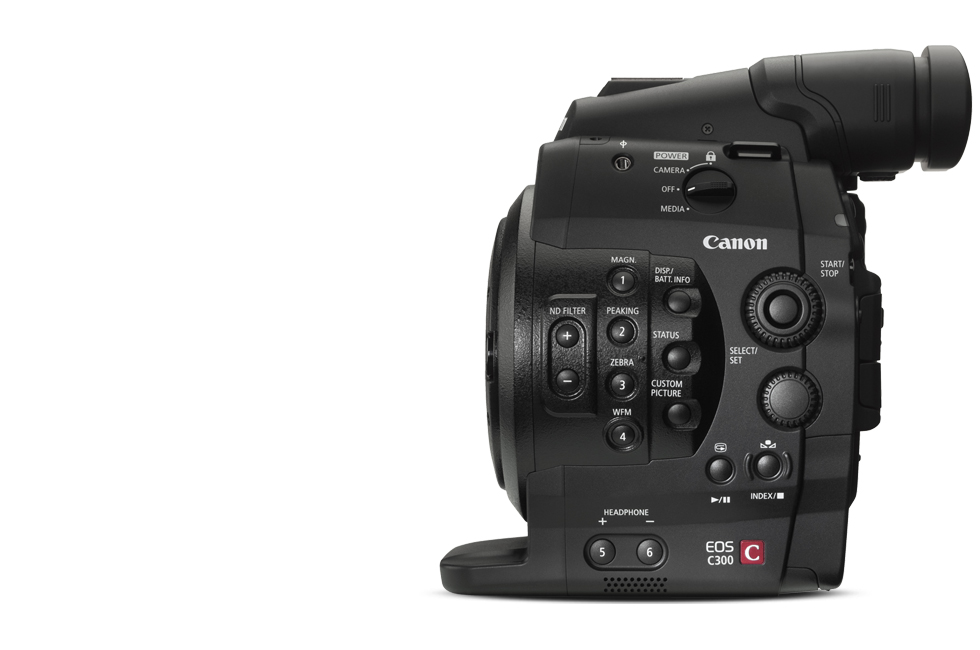
Canon announces EOS CINEMA SYSTEM-C300


     By incorporating the HD Video module in still cameras, the main stream Camera Manufactures brings a revolution in parallel cinema industry , the disappearance of camcoder was the instant impact, those who want a video option, are selecting still cameras. The parallel cinema industry is the main beneficiaries of this DSLRs, Canon's 5D, 7D, and 550D are the favorites in HD video still camera market.

                         
                Now Canon announced that the company has been developing a full frame EOS DSLR capable of recording 4k video at 24 fps. Most digital cameras today are capable of shooting Full HD Video but which is just the 2k video. This camera uses a 35mm sensor. Canon named this camera as C300, the company claims the 4k capable sensor improves low light performance. The price of C300 will be USD 20,000 (approx.Rs.10 lakhs) and will be available towards the end of May 2012.


        Canon aimed the the mainstream cinema industry with this camera, if it hits the industry it will make a big revolution in film making. RED Digital cinema introduced the scarlet-X, with better video facilities also another news showing that the cinema going to be digital .

EOS C300 Features


Super 35mm-equivalent 16:9 Large CMOS Sensor

Large imager unleashes full creative potential. Modeled on the Super 35mm 3-perf motion picture film standard, Canon's CMOS sensor has an active image size of 24.6 x 13.8mm. The image sensor utilizes an innovative readout technique that delivers full bandwidth individual RGB video components without the need for any
debayering algorithms.
  • 8.3 MP sensor
  • Shallow Depth of Field
  • High Sensitivity/Low Noise
  • High signal-to-noise ratio
  • Reduced rolling shutter artifacts
  • Signal processing equivalent to that of 3-chip RGB systems
  • 8 MP Bayer array; no pixel interpolation needed


Friday, December 2, 2011

New PEN- Olympus PEN-E-PM1


         Olympus introducing latest one in its PEN Camera series, the latest one is Olympus PEN E-PM1.The Camera sharing almost same features with its brethren cameras and distinguishes with some additional or enhanced features.

Features

The Company ensured that all the recent PEN Cameras share the same sensor.The E-PM1 has the same 14-42mm sstandard zoom lens,12.3MP high speed Live MOS sensor as the E-P3 and the E-PL3. Besides these E-PM1 has the same FAST (Frequency Acceleration Sensor Technology) AF systems as the other two models, it has a 35 focus point distributed over the sensor .

The Dual Core Processor

The dual core processor stores an image simultaneously while you are going for another shot , so you need not to wait for the camera to save the data in to the memory card , it gives you the freedom to shoot as many shots in the burst mode .Since the internal technologies are about the same as its forerunners, this camera distinguishes only in size and some features.

The Distinguishing features

The E-PM has the capacity to shoot at 4.1 fps(5.5 fps when IS switched off) while the costly E-P3 has only 3fps. E-PM1 has Six Art filters and it weighing 100 g .The 3 inch LCD that offers a 16:9 aspect ratio- ideal for video.


Olympus PEN Mini E-PM1 key specifications:

  • Updated 12MP Live MOS sensor
  • 120 Hz 'Fast AF' focus system          
  • Clip-on flash (included)
  • Built-in autofocus illuminator light
  • 460,000 dot LCD screen (16:9 aspect ratio)
  • Dual-core TruePic VI processor
  • 1080i60 movies in AVCHD format
  • In-body (sensor-shift) image stabilization system

Box Contents

         
  • M.ZUIKO DIGITAL 14-42mm 1:3.5-5.6 II R Black
  • M.ZUIKO DIGITAL ED 40-150mm 1:4.0-5.6 R Black
  • Flash FL-LM1
  • BLS-1 or BLS-5
  • BCS-1 or BCS-5
  • Micro Four Thirds body cap (BC-2)
  • Shoulder Strap
  • CB-USB6 USB Cable
  • CB-AVC3 Audio/Video cable
  • [ib] Image Management Software
  • Olympus Viewer 2 Software CD-ROM
  • Operating Instruction

Friday, November 18, 2011

Nikon Enters in to Mirrorless Segment


Nikon finally arrives to the mirrorless segment era with announcement of Nikon V1 and Nikon J1. Both Camera uses a CX sensor with a size of 13.2 X 8.8mm (1 inch), the sensor is even smaller than Micro four third , this attempt is made to make the camera a smallest one, while the reviewers criticizing this effort .
With a new Sensor
      
           These 10.1 MP cameras are faster than Nikon's other popular DSLRs as the company claims. The dual core EXPEED 3 processor enables data transfer speed even faster than D3s , so the camera has the ability to shoot still images at 10fps, and 60fps with the auto focus locked. The camera able to shoot full HD Movies with full time AF and can also shoot 1080i video at 60fps and use frame rates up to 1200fps for super slow motion effects.


Basic Features
  • Model Number: V1
  • Camera Format: Compact System Camera
  • Resolution: 10.10 Megapixels
  • Kit Lens: 3.00x zoom 10-30mm (27-81mm eq.)
  • Viewfinder: EVF / LCD LCD
  • Size: 3.0 inch ISO: 100-6400
  • Shutter: 30-1/16000
  • Max Aperture: 3.5
  • Dimensions: 4.4 x 3.0 x 1.7 in. (113 x 76 x 44 mm)
  • Weight: 13.5 oz (383 g) includes batteries
  • Price: $900
  • Availability: 10/2011


Specifications


Sensor • 13.2 mm x 8.8 mm CMOS sensor
• 10.1 million effective pixels
Image sizes • 3872 x 2592
• 2896 x 1944
• 1936 x 1296
• 3840 x 2160
Aspect ratio 3:2, 16:9
Movie clips • 1920 x 1080 @ 60i/30 fps
• 1280 x 720 @ 30/15 fps
• 640 x 480 @ 30/15 fps
• 320 x 240 @ 30/15 fps

Slow-motion movies
• 640 x 240/400 fps (plays at 30p/29.97 fps)
• 320 x 120/1,200 fps (plays at 30p/29.97 fps)

Motion Snapshot Motion Snapshot
• 1,920 x 1,080/60p (59.94 fps) (plays at 24p/23.976 fps)
Sensor output is about 60 fps
File format • NEF (RAW)
• JPEG

Movie:
• MOV
• H.264/MPEG-4 Advanced Video Coding compression
• AAC audio
Lens mount • Nikon 1 mount
• Approx. 2.7x lens focal length (Nikon CX-format)
Focus • Hybrid autofocus (phase detection/contrast-detect AF); AF-assist illuminator
AF are • Single-point (135 points)
• Auto-area (41 points)
• Subject tracking
Lens Servo • Autofocus (AF): Single AF (AF-S); continuous AF (AF-C); auto AF-S/AF-C selection (AF-A); fulltime AF (AF-F)
• Manual focus (MF)
Focus distance • Standard mode 0.6m (wide) / 1.0m (tele)
• Macro mode 0.2m - (wide) / 0.9m (tele)
• Super Macro mode Closest focusing distance: 1cm
ISO sensitivity • Auto
• High Auto
• Manual ISO 100, 200, 400, 800, 1600, 3200, Hi 1 (6400 equiv.)
Exposure compensation • +/- 3 EV
• 1/3 EV steps
metering TTL metering using image sensor
• Matrix
• Center-weighted
• Spot
Shuttter speed Mechanical Shutter
• 1/4000 sec. –30 sec.
• Bulb
Electronic Shutter
• 1/16000 sec. –30 sec.
• Bulb
Modes • Programmed auto with flexible program
• Shutter-priority auto
• Aperture-priority auto
• Manual
• Scene auto selector
Shooting Modes • Still image (3 : 2)
• Smart Photo Selector (3 : 2)
• Movie (HD 16 : 9, slow motion 8 : 3)
• Motion Snapshot (16 : 9)
White balance • Auto
• Incandescent
• Fluorescent
• Direct sunlight
• Flash
• Cloudy
• Shade
• Preset manual
Picture Control system • Standard
• Neutral
• Vivid
• Monochrome
• Portrait
• Landscape
EVF • 0.47-in., approx. 1440k-dot color TFT LCD viewfinder
• 100% coverage
LCD monitor • 3.0" / 7.5 cm LCD
• 921,000 dots
Continous shooting • Electronic (Hi): Approx. 10, 30, or 60 fps
• Other modes: Up to 5 fps (single AF or manual focus, S Shutter-priority auto or M Manual exposure mode, shutter speed 1/250 s or faster, and other settings at default values)
Connectivity • DC input
• Combined A/V & USB output
• USB 2.0 compatible
• HDMI
• Multi accesory port
Storage • SD/SDHC/SDXC
Power Li-ion Rechargeable Battery (EN-EL15)
Weight (no batt) 294g
Dimensions 4.42"W x 3"H x 1.7"D
(113mm x 76mm x 44mm)


courtesy:http://www.dpreview.com/, http://www.nikonusa.com/
Related Posts Plugin for WordPress, Blogger...